Building Skills, Creating Opportunity, and Strengthening Local Communities

CPCCLRG3002

Licence to Perform Rigging Intermediate Level

Intermediate rigging pushes into heavier, more complex lifts, tower crane components and tilt-up panels that basic rigging doesn’t cover. CPCCLRG3002 Licence to Perform Rigging Intermediate Level builds the skills to plan the task, select and inspect gear, conduct multiple-crane lifts, erect crane sections and lift tilt-up panels, and complete the task safely. It is your training step towards the rigging intermediate High Risk Work Licence.
Training Details

This unit specifies the skills and knowledge required to safely perform intermediate rigging work. Riggers use mechanical load shifting equipment and associated gear to move, place or secure loads, including plant, equipment or members of a building or structure, ensure the stability of those members, and set up and dismantle cranes and hoists.

This unit includes rigging work involving hoists with jibs and self-climbing hoists, cranes, conveyors, dredges and excavators, tilt slabs, demolition of structures or plant, and multiple lifts. Rigging work is undertaken in construction and other industries where load shifting equipment is used to move, place or secure loads.

Completion of the general construction induction training program is required by anyone carrying out construction work. Achievement of CPCWHS1001 Prepare to Work Safely in the Construction Industry (White Card) meets this requirement. This unit also has a prerequisite: it can be met by successfully completing CPCCLRG3001 Licence to Perform Rigging Basic Level, or by holding a valid basic rigging licence.

Assessment is competency-based and combines theory with practical demonstration, using the National Assessment Instrument mandated for the licence.

The unit covers the core stages of intermediate rigging work:

  • planning the task
  • selecting and inspecting equipment
  • setting up the task
  • undertaking intermediate rigging activities
  • completing the task

Find more information on CPCCLRG3002 – Licence to perform rigging intermediate level on training.gov.au.


Learning Outcomes

  • Plan the task: reviewing task instructions, identifying hazards and risk controls, calculating loads, and establishing communication methods
  • Select and inspect equipment: selecting and checking PPE, rigging gear and communication equipment, and isolating and reporting defective items
  • Set up the task: communicating the task plan and risk controls, and confirming the ground, foundation and structure are suitable for the task
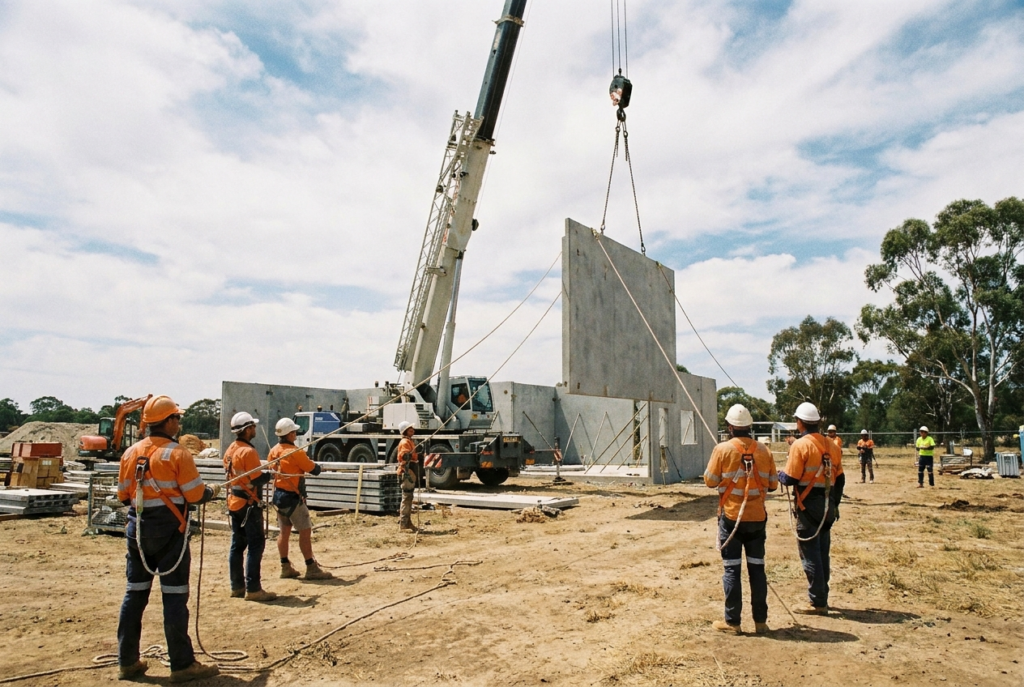
  • Undertake intermediate rigging activities: conducting a multiple-crane lift, erecting and dismantling a tower crane or lattice boom section, lifting and installing tilt-up concrete panels, and removing a concrete-encased steel column and beam
  • Complete the task: removing excess materials, inspecting and storing gear, and removing risk controls

On successful completion you receive a nationally recognised Statement of Attainment for CPCCLRG3002 Licence to Perform Rigging Intermediate Level. Competence in this unit does not by itself grant the licence; you then apply to WorkSafe WA for the rigging intermediate High Risk Work Licence separately.


Performance Evidence

To demonstrate competency in this unit, a candidate must meet the elements and performance criteria by safely performing rigging tasks at an intermediate level, including:

  • undertaking a multiple-crane lift of a load of at least 1 tonne and at least 4 metres long
  • erecting and dismantling a tower crane section, crane lattice boom section, or a fly jib on a mobile slewing or non-guyed tower crane
  • installing and removing a three-panel tilt-up structure, with each panel at least 4 metres high, 2 metres wide and 1.5 tonnes
  • using the round turn and two half-hitches techniques
  • checking relevant workplace information, performing all activities to workplace and manufacturer requirements, and using associated gear including tag lines, wire rope, chains, slings, shackles, turnbuckles, chain blocks, sheaves, spreader bars, snatch blocks and lifting clutches
  • identifying hazards and applying appropriate risk controls and safety measures


Knowledge Evidence

To be competent in this unit, a candidate must demonstrate knowledge of:

  • safe work requirements for rigging under Australian Standards and Commonwealth and state or territory WHS legislation, regulations, standards and codes of practice
  • workplace information, including safe work method statements, permits, certifications and equipment service and maintenance records
  • workplace procedures, including emergency plans and incident reporting
  • hazard identification and mitigation strategies, including the hierarchy of control and use of PPE
  • hazards commonly encountered in intermediate rigging, including unstable work areas, damaged equipment, overhead and underground hazards, mobile plant, adverse weather, falling objects and falls from height
  • minimum clearance distances from powerlines and electrical equipment
  • risk controls and equipment, including traffic and pedestrian barricades, PPE, lighting, exclusion zones and safety screens
  • inspection, handling and storage of rigging structures and equipment, associated gear and safety equipment, including harnesses, lanyards and static lines
  • PPE requirements and communication equipment, including two-way radios and whistles
  • the roles of relevant persons, including doggers, riggers, load-shifting plant operators, engineers and supervisors
  • ground and foundation suitability, including uneven ground, soft soils, rock, concrete and suspended floors
  • mathematical processes for estimating and measuring forces and loads, and techniques for tying the round turn and two half-hitches

PLEASE NOTE:
Australian Advanced Academy (RTO 45286) holds this qualification on its scope of registration and is responsible for training, assessment and certification. This course is delivered on their behalf under a training agreement.

Talk to Our Team

Interested in starting this training? Complete the form below with your information and the Agora team will be in touch shortly to discuss.

This site is protected by reCAPTCHA and the Google Privacy Policy and Terms of Service apply.