Building Skills, Creating Opportunity, and Strengthening Local Communities

CPCCLDG3001

Licence to Perform Dogging

Dogging puts you in control of every lift, directing loads that are often out of the crane operator’s sight. CPCCLDG3001 Licence to Perform Dogging builds the skills to plan the lift, select and inspect lifting gear, sling and direct the movement of loads safely, and use hand, whistle and radio signals to communicate with the crane operator. It is your training step towards the dogging High Risk Work Licence.
Training Details

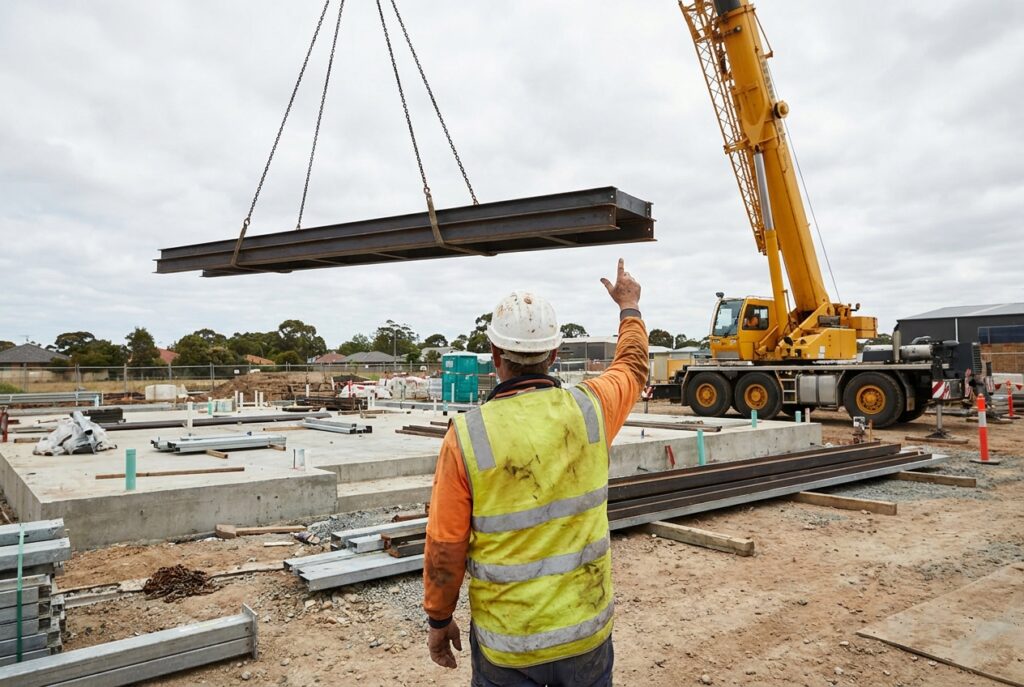
This unit specifies the skills and knowledge required to safely perform dogging work. Dogging consists of the application of slinging techniques to move a load, including selecting and inspecting lifting gear, and directing a plant operator in the movement of a load when the load is out of sight of the operator. Dogging work is conducted in the construction industry and other industries where loads are lifted and moved using cranes or hoists.

Completion of the general construction induction training program is required by anyone carrying out construction work. Achievement of CPCWHS1001 Prepare to Work Safely in the Construction Industry (White Card) meets this requirement.

Assessment is competency-based and combines theory with practical demonstration, using the National Assessment Instrument mandated for the licence.

The unit covers the core stages of dogging work:

  • planning the task
  • selecting and inspecting equipment
  • setting up the task
  • performing the task
  • packing up and cleaning up

Find more information on CPCCLDG3001 – Licence to perform dogging on training.gov.au.


Learning Outcomes

  • Plan the task: reviewing task instructions, identifying hazards and risk controls, calculating load weight and centre of gravity, and establishing communication methods
  • Select and inspect equipment: selecting and checking PPE, lifting gear and communication equipment, and isolating and reporting defective items
  • Set up the task: communicating the lift plan and risk controls, preparing lifting gear, and attaching and securing gear to the plant’s lifting point
  • Perform the task: directing the lifting point over the load, attaching and securing gear using slinging techniques, conducting a test lift, and directing the movement of the load
  • Pack up and clean up: removing excess materials, inspecting and storing gear, and removing risk controls

On successful completion you receive a nationally recognised Statement of Attainment for CPCCLDG3001 Licence to Perform Dogging. Competence in this unit does not by itself grant the licence; you then apply to WorkSafe WA for the dogging High Risk Work Licence separately.


Performance Evidence

To demonstrate competency in this unit, a candidate must meet the elements and performance criteria by slinging and directing the movement of at least five loads of differing shapes, sizes and weights, using a slewing mobile crane of a maximum rated capacity of at least seven tonnes. The candidate must:

  • check relevant workplace information, including safe work method statements, and equipment service and maintenance records
  • perform all activities in compliance with safe work practices and workplace procedures, and check, use, maintain and store equipment to manufacturer requirements
  • identify hazards and apply appropriate risk controls and safety measures
  • determine load weight and travel path in consultation with the crane operator
  • select and inspect appropriate lifting gear and apply slinging techniques suited to the load, its mass and centre of gravity
  • identify the working load limit tags of lifting equipment and calculate the deration of the working load limit resulting from the slinging techniques applied
  • make temporary connections to loads using fibre or synthetic ropes, using the single sheet bend, clove hitch, rolling hitch and bowline
  • use radio communication and hand and whistle signals to guide the crane operator, including when the load is out of sight
  • direct each load through at least 180 degrees of the crane’s slewing radius, across load types including a stillage, loose steel pipes, an uneven load, a steel plate and a round load
  • use each of the following at least once: flexible steel wire rope sling, synthetic sling, chain sling, spreader bar or lifting beam, tag line, shackles, eyebolts and plate clamps


Knowledge Evidence

To be competent in this unit, a candidate must demonstrate knowledge of:

  • safe work requirements for dogging under Commonwealth and state or territory WHS legislation, standards and codes of practice
  • workplace information, including safe work method statements, permits, certifications and equipment service and maintenance records
  • workplace procedures, including emergency plans and incident reporting
  • hazard identification and mitigation strategies, including the hierarchy of control and use of PPE
  • hazards commonly encountered in dogging, including unstable landing surfaces, overhead and underground hazards, traffic, weather and work at heights
  • risk controls and equipment, including traffic management, exclusion zones, barricades, lighting and fall prevention equipment
  • PPE requirements, including hard hat, safety boots, gloves, high-visibility clothing and sun protection
  • hand, whistle and two-way radio communication signals, including stop, hoist, luff, telescope and slew
  • selection, inspection, care, handling and storage of dogging equipment and gear, and slinging techniques
  • load destination stability, load capacity and safe access for the ground, loading platforms, suspended floors and vehicles
  • mathematical processes for calculating deration of the working load limit due to slinging techniques
  • methods of making temporary connections to loads, including the single sheet bend, clove hitch, rolling hitch and bowline

PLEASE NOTE:
Australian Advanced Academy (RTO 45286) holds this qualification on its scope of registration and is responsible for training, assessment and certification. This course is delivered on their behalf under a training agreement.

Talk to Our Team

Interested in starting this training? Complete the form below with your information and the Agora team will be in touch shortly to discuss.

This site is protected by reCAPTCHA and the Google Privacy Policy and Terms of Service apply.